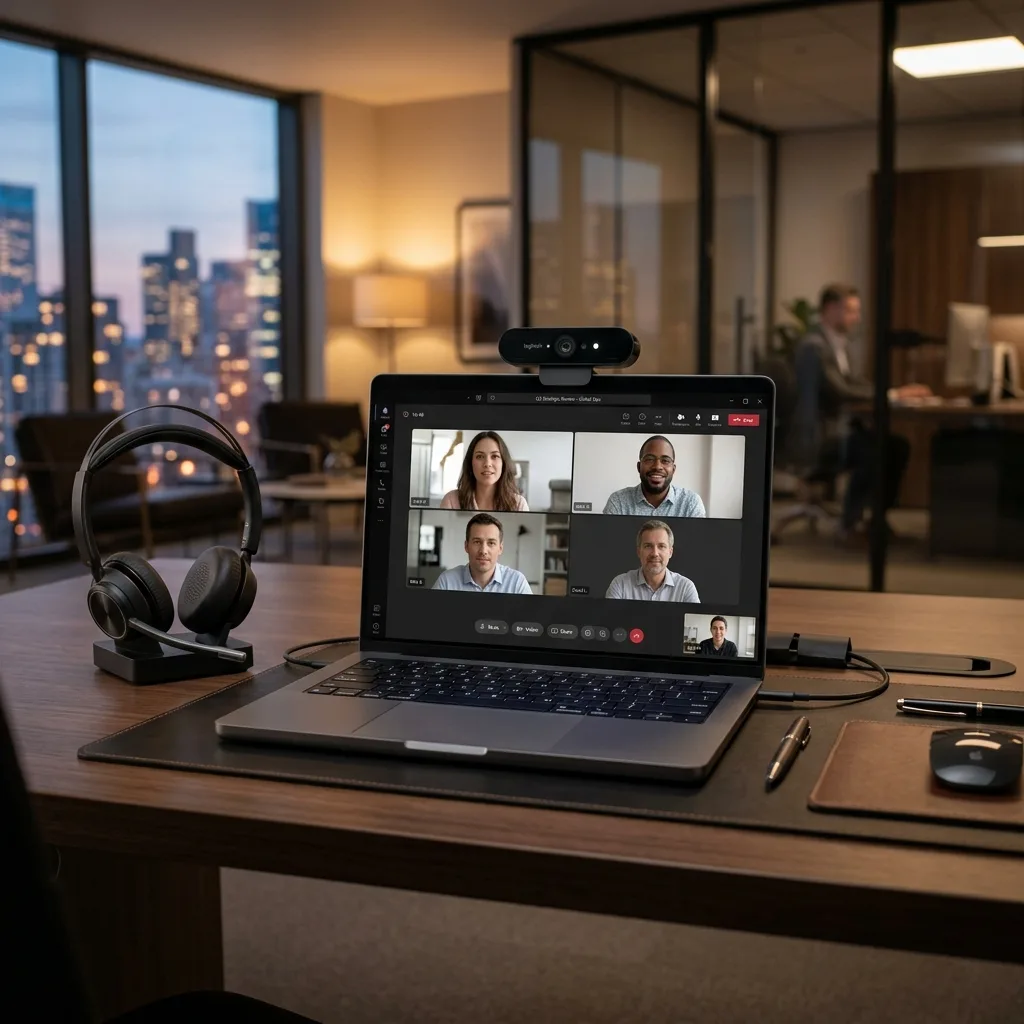
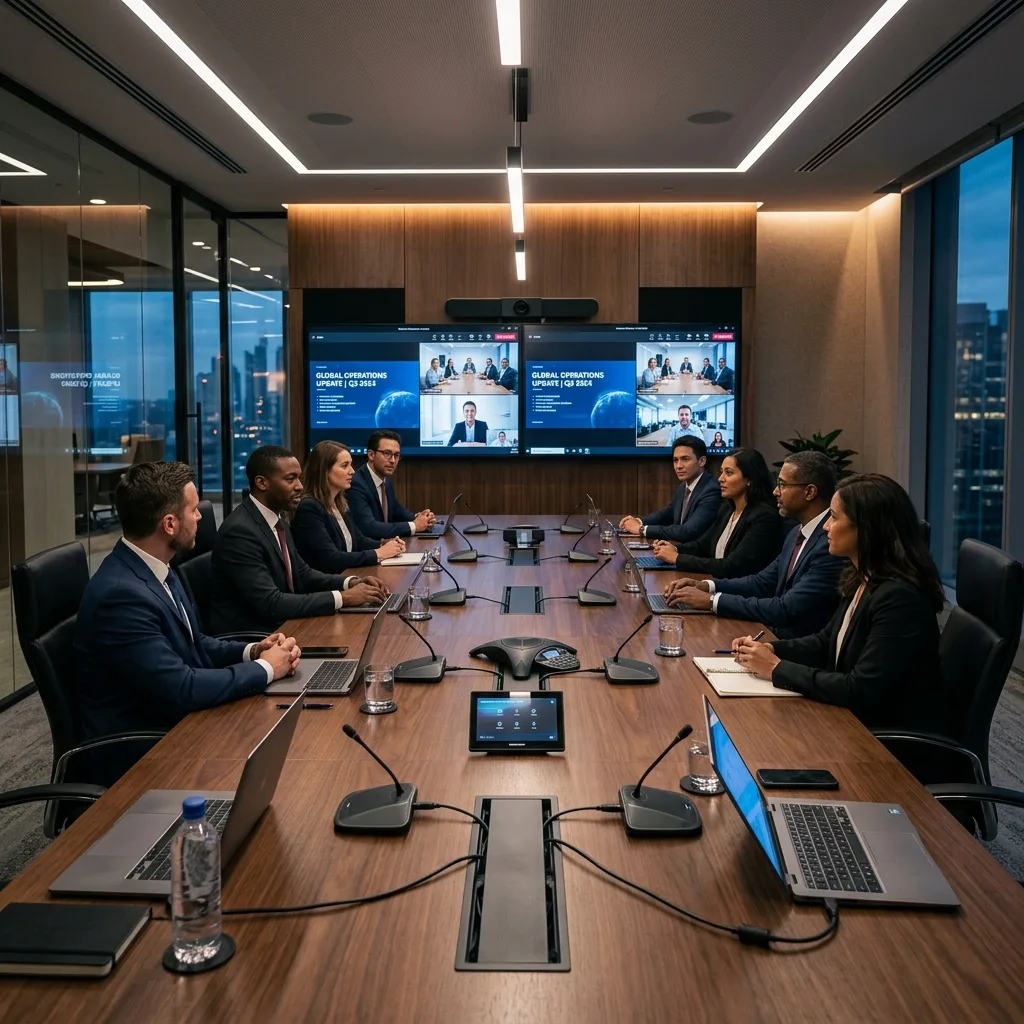
Every enterprise we walk into now runs on a mix of in-room and remote attendees, often in the same call. That single shift has done more to change AV specification over the last few years than any single piece of hardware. The room is no longer the audience, the camera is. Once you internalise that, the priority list for 2026 becomes a lot clearer.
What actually moved the needle this year
We evaluate dozens of AV product lines a year across Crestron, Cisco, Poly, Yealink, and Microsoft's Teams Rooms ecosystem. Most incremental updates don't change how a room feels to use. The technologies below did, enough that we now include them as standard in most enterprise deployments rather than as premium add-ons.
- Certified all-in-one video bars, single-cable room systems (camera, speaker, mic array) that cut install time and points of failure versus componentised setups.
- AI auto-framing and speaker tracking, cameras that keep every in-room participant visibly framed without a technician riding the controls.
- Voice isolation and noise suppression, background typing, HVAC hum, and hallway noise filtered out at the mic array, not left to software guesswork later.
- Wireless content sharing, one-tap casting from any laptop without dongles or driver installs, critical for BYOD and guest presenters.
- Room scheduling panels with occupancy sensing, outside-the-door displays that release unused bookings automatically, ending the phantom-booked-room problem.
- Unified control across platforms, a single touch panel that runs Teams, Zoom, and Google Meet without swapping hardware or re-training staff.
- Acoustic treatment as a line item, not an afterthought, panelling and room geometry fixes that no amount of DSP can fully compensate for.
- Video walls for command centres, LED and narrow-bezel LCD walls now cost-competitive enough for NOCs and trading floors below flagship budgets.
- Centralised device management, remote monitoring and firmware push across every room from one dashboard, essential once you're past ten rooms.
- Sustainability-rated hardware, lower standby draw and longer refresh cycles, increasingly a procurement requirement rather than a nice-to-have.
The checklist we give clients before they specify a room
Before any hardware conversation, we ask three questions: how many people will typically be in the room, what platform does the organisation standardise on, and who owns the room after handover. Answering those honestly avoids the most common mistake we see, over-speccing a huddle space with command-centre hardware because a vendor demo looked impressive.
The best AV room is the one nobody notices. If your team is thinking about the technology instead of the meeting, something in the spec was wrong.
Rohan Mehta, Practice Lead, Audio Visual, Vectrae
Technology choices matter, but they only pay off with correct room design and a support plan behind them. That's the part vendors rarely tell you at the demo stage, and the part that determines whether a room still works reliably eighteen months after installation.